
Hollow Knight
Published February 5, 2026
I don’t play video games every day anymore, but I still do enjoy them from time to time. I don’t really like competitive online games anymore like I did in high school, but I absolutely love single player games that have interesting game mechanics and puzzles. My favorite video games of all time are Hollow Knight and its sequel Silksong. They are both 2D platforming games in a sprawling world filled with bug creatures. To me, everything about both of these games is perfect. The level design, art, music, animations, story, theme, and just everything is just perfect.
I like indie games far more than the AAA games that get the most attention (indie is short for independent, and these games are made by a small team, whereas AAA games are the major titles released by huge companies). I find that these games frequently have the most unique and interesting game mechanics and a really fun, cohesive idea. Plus they are often cheaper and have fewer microtransactions that are trying to squeeze you for every last drop of profit. Hollow Knight and it’s sequel are made by Team Cherry, a game studio comprised of only three people. It’s unbelievably impressive to me that they were able to create such large games with only them.
Both games are essentially the same: they both are 2D platforming games where you fight the little bug enemies with a sword. I played the original Hollow Knight in 2020, and Silksong on the first day it launched this past summer. Hollow Knight was already my favorite video game of all time, and playing Silksong was like experiencing my favorite thing ever for the first time again.
The story
Both games have the player piece together the story from tiny lore tidbits that are strewn throughout the game. In Hollow Knight, you are delving into an underground kingdom full of bug creatures that is about to fall. It is being taken over by a disease of an unknown origin. In Silksong, you play as a different character that has been transported to another kingdom that has already fallen into ruin. Where the atmosphere of Hollow Knight was one of discovery and adventure, in Silksong it is much more depressing as things are all dead or dying.
The gameplay mechanics
Both games are side-scroller platforming games. They are both typically described as a “Metroidvania”, which means that you have very little direction and are free to explore how you want. Often, you explore an area but are locked out of a certain section until you gain more abilities, like a double jump. The game encourages backtracking through areas you’ve already completed in order to find new areas to explore with your new abilities. These games feature some very difficult platforming sections which are super fun to figure out. The enemies and the bosses are so well designed and are so fun to fight. There are times where you just perfectly dodge the enemies that that are so satisfying. Both games, Silksong in particular, are known to be very difficult, but I never found them frustratingly so.
The art
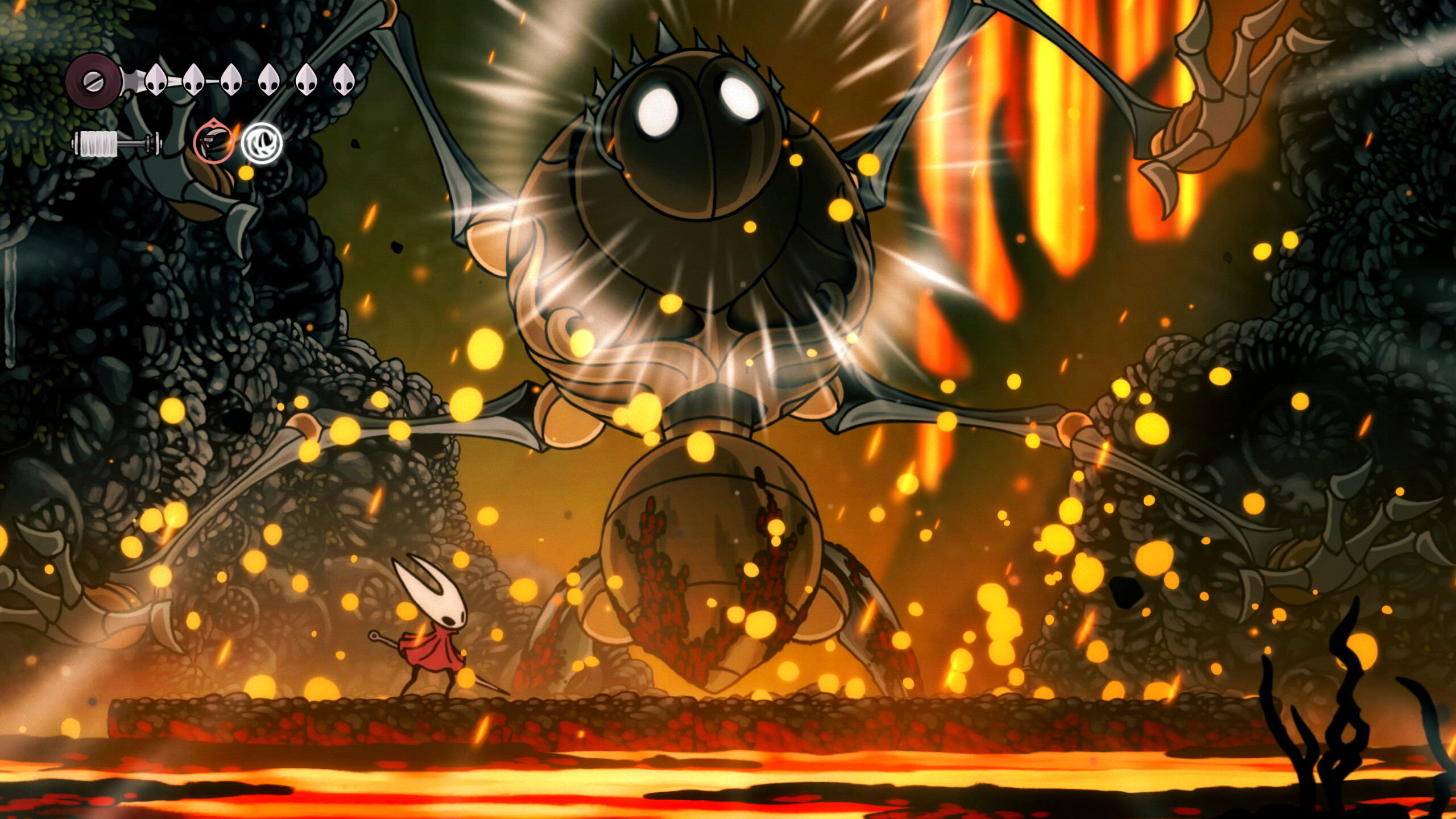
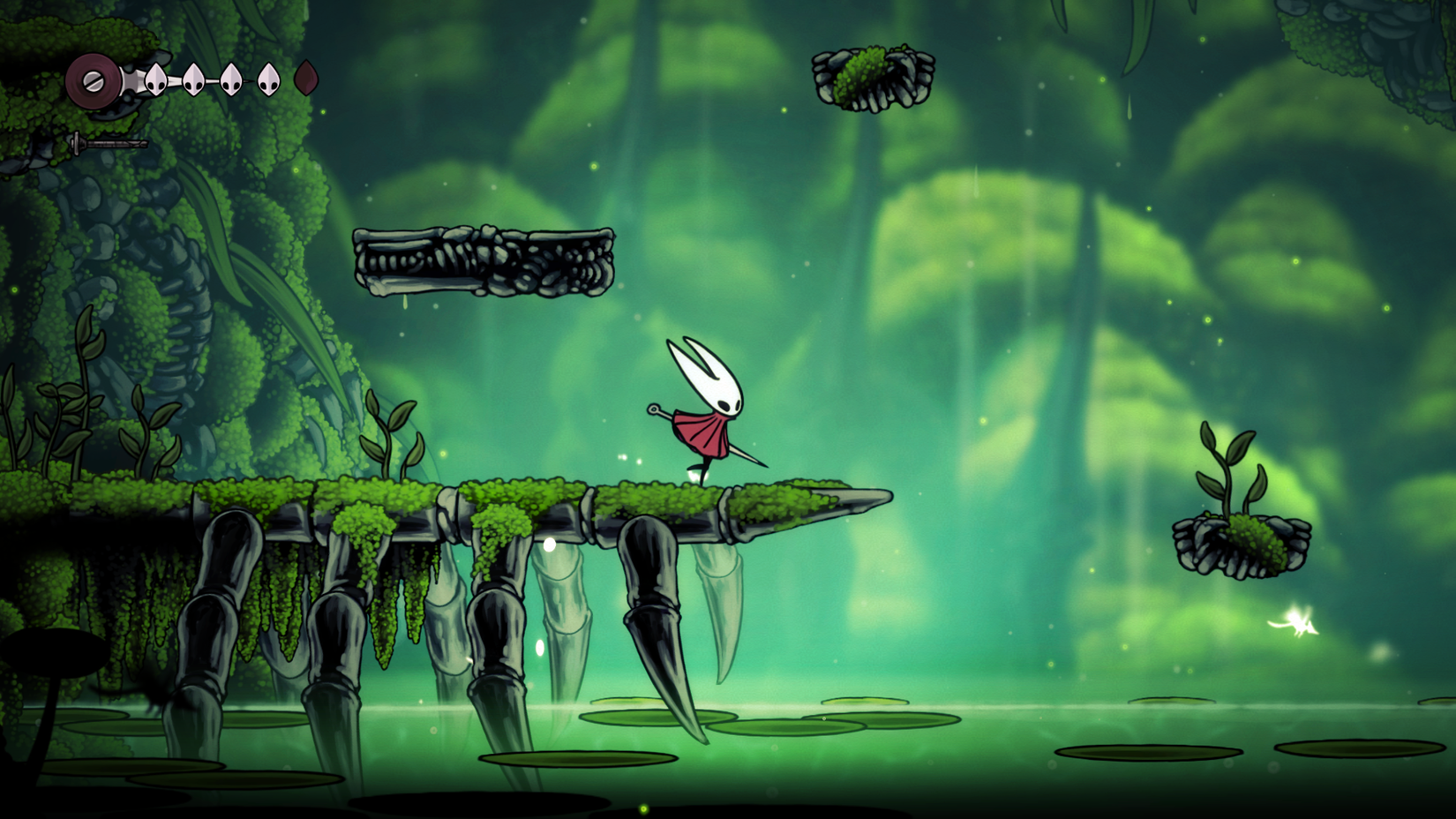
I adore the art style in this game. It is quite minimalistic, but not too much. The animations are super fluid and satisfying, and the color pallets and the way each new area feels distinct is so engaging. The characters speak in this unintelligible babble kind of like the adults in Charlie Brown, which in some cases is just adorable.
The music
Of course, as a music nerd, a game isn’t perfect if it doesn’t also have an amazing soundtrack, and the composer Christopher Larkin totally killed it for both of these games. I love how he makes each different area sound so distinct and his use of themes throughout the games. The final boss in Hollow Knight is kind of a sad story, and the way he writes a funeral march as a final boss theme is just so good. In Hollow Knight all of the instruments are synthesized except for the viola, which is such a good choice. Using a viola to symbolize the main character just fits the whole vibe perfectly, much more than a violin or a cello would, which would’ve been the more common choices.
Silksong also uses many synthesized instruments, but uses more real stringed instruments as well (they could probably afford more musicians after becoming millionaires after the success of Hollow Knight). The dies irae theme is used throughout Silksong to symbolize all the death in the world. The way the theme is developed is just one of the coolest things I’ve ever seen in a video game soundtrack. One of the most special moments in this game is the ”Cogwork Dancers” boss fight, where you fight two dancers that attack in sync with the music. As the fight progresses, they speed up along with the music, and once you kill one of them, the other one starts breaking down. Similar to the final boss in Hollow Knight, this fight gets so sad at the end.
Here are two of my favorite pieces, one from each game: City of tears from Hollow Knight and The Awakening from Silksong.
I really cannot say enough good things about these two video games. They are probably my favorite works of art of all time. I can understand that they are not for everybody, since not everyone would like the gameplay or the difficulty, but I am constantly recommending them. They are only about $20 each on Steam and other platforms, and have no in-app purchases.